
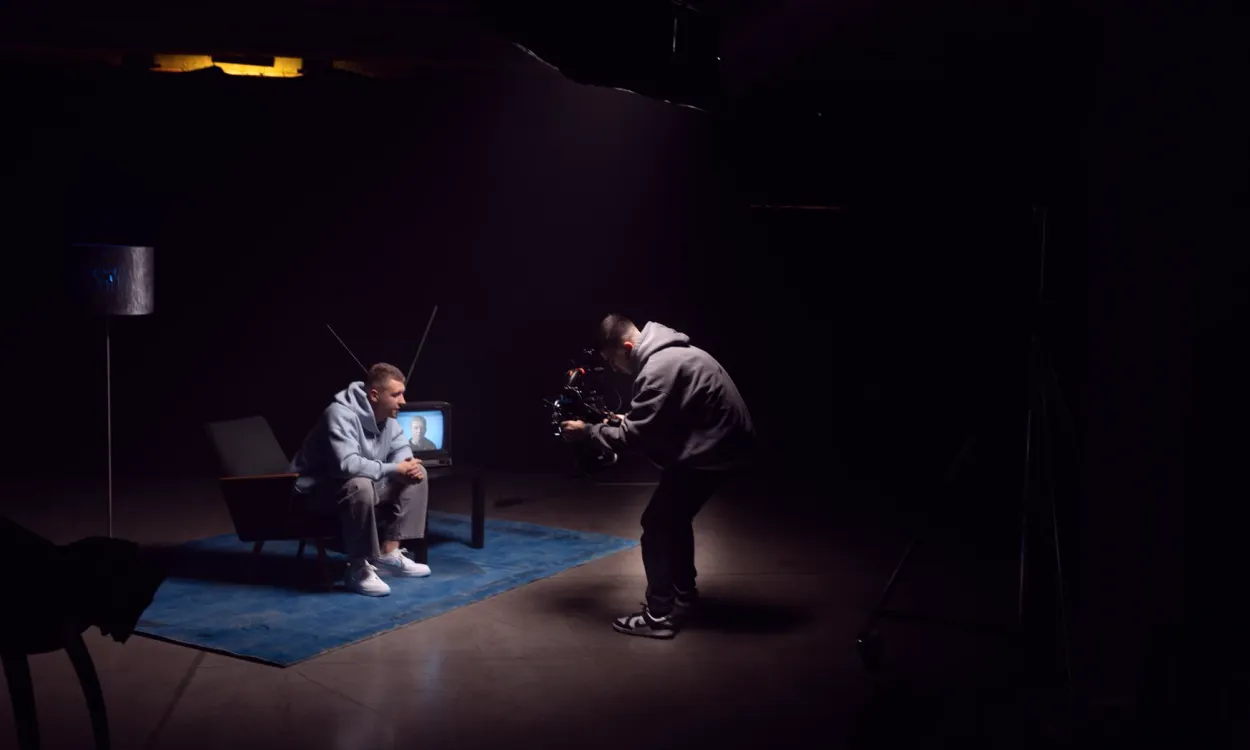
Lighting the set instead of the shot
The most common mistake I see is a rig drawn for the room rather than for the camera. Someone walks the floor, decides it feels bright and even, and signs it off. Then the gallery looks at the monitors and finds flat faces, a washed-out backdrop and a desk that glows brighter than the presenter sitting behind it.
A set only has to look right from the lens positions it will actually use. Before any lamp is hung, we ask which cameras cover the desk, where each presenter sits and how far they lean in when they read. Those answers decide what is lit hard, what is lit soft and what can stay in shadow.
The fix is to plot from the camera backwards. Draw the shot first, then place the lamps that serve it, and leave out any fixture that has no job on screen.
- Mark every camera position on the plot before placing a lamp
- Light faces first, then desk, then background
- Check the picture on a monitor, not by eye on the floor
Skipping the walk-through with the people who will use it
A plot can be technically sound and still fail on the first live day because the crew who reset it were never shown how. Rigs drawn in isolation tend to need a specialist standing beside them, which is a poor use of anyone's morning.
Daniel, our lighting designer, favours simple rigs that a floor team can reset quickly, and that preference comes from watching complicated ones drift out of position between bulletins. Every lamp that needs a ladder and a long explanation is a lamp that will eventually be left wrong.
Walk the plot with the floor manager and the gallery before the first rehearsal. Ask them which fixtures they would be nervous to touch, and simplify those first.
- Label focus positions with tape the crew can read at a glance
- Keep a one-page plot at the floor manager's desk
Ignoring what the presenter's skin and clothing do
Lighting that looks fine on a stand-in often misbehaves the moment a real presenter sits down. A glossy forehead, a white shirt or a patterned jacket can push the exposure the wrong way, and the camera operator ends up chasing it with iris changes during the programme.
The habit that avoids this is a short check with the actual people, in the clothes they plan to wear, at the seat they will occupy. It takes ten minutes and saves a long argument in the gallery later.
If a presenter changes between segments, test both looks. A modest adjustment to key level or position is far easier before the show than once the light is live and the clock is running.
Mixing colour temperatures without noticing
Daylight leaking through a studio door, a practical lamp on the set, and a rig of mixed fixtures can all sit at different colour temperatures. The eye adapts and sees nothing wrong, while the camera shows a blue edge on one side of a face and an orange cast on the other.
Pick one colour temperature for the set and hold to it. Where a practical lamp is part of the design, give it a bulb that matches, or treat it as a deliberate accent and keep it out of the faces.
Cover or control any window light. A set lit correctly at night can look quite different during a midday recording, and mid autumn light changes noticeably over a single afternoon.
- Match every fixture on the faces to one colour temperature
- Block or flag stray daylight before white balancing
Overloading the power and the rig
Adding one more lamp to solve a small problem is how a tidy rig becomes a crowded one. Each extra fixture draws power, adds heat, throws another shadow and gives the crew one more thing to reset or switch off in the right order.
Before adding anything, ask whether an existing lamp could be moved or its output changed instead. A rig with fewer, better placed fixtures is quicker to set and easier to fault-find when a lamp fails mid-programme.
Check the distribution as well. Know which circuits feed which fixtures, label them, and keep a note of the total load so nobody discovers the limit by tripping it live.
- Count the load per circuit before adding fixtures
- Label dimmer channels the way the plot names them
Treating the lighting as finished after the first day
A plot is a working document. Sets get new props, desks are moved a few centimetres, presenters change and seasons alter the light coming in from outside. A rig that was right in the first week can quietly drift away from the plot.
Build a short review into the routine. After the first few live days, look at recorded output with fresh eyes, note what the gallery keeps correcting, and update the plot so the written version matches what is actually hanging.
Keeping the paperwork honest matters most when someone new takes over. A current plot lets a replacement operator reproduce the look without guesswork.
Most lighting problems are small decisions skipped early: plotting from the lens, walking the crew through the rig, testing with the real presenter, holding one colour temperature, keeping the load honest and updating the plot afterwards. None needs special equipment, only a little discipline before the cameras roll. If your set keeps needing the same corrections every day, the plot is usually where to look first.